Case Study · Mobile · 2024

Waste
Bazaar

A waste-to-value marketplace. Households book verified pickups, drivers see what a job is worth, and recycling finally pays both sides.

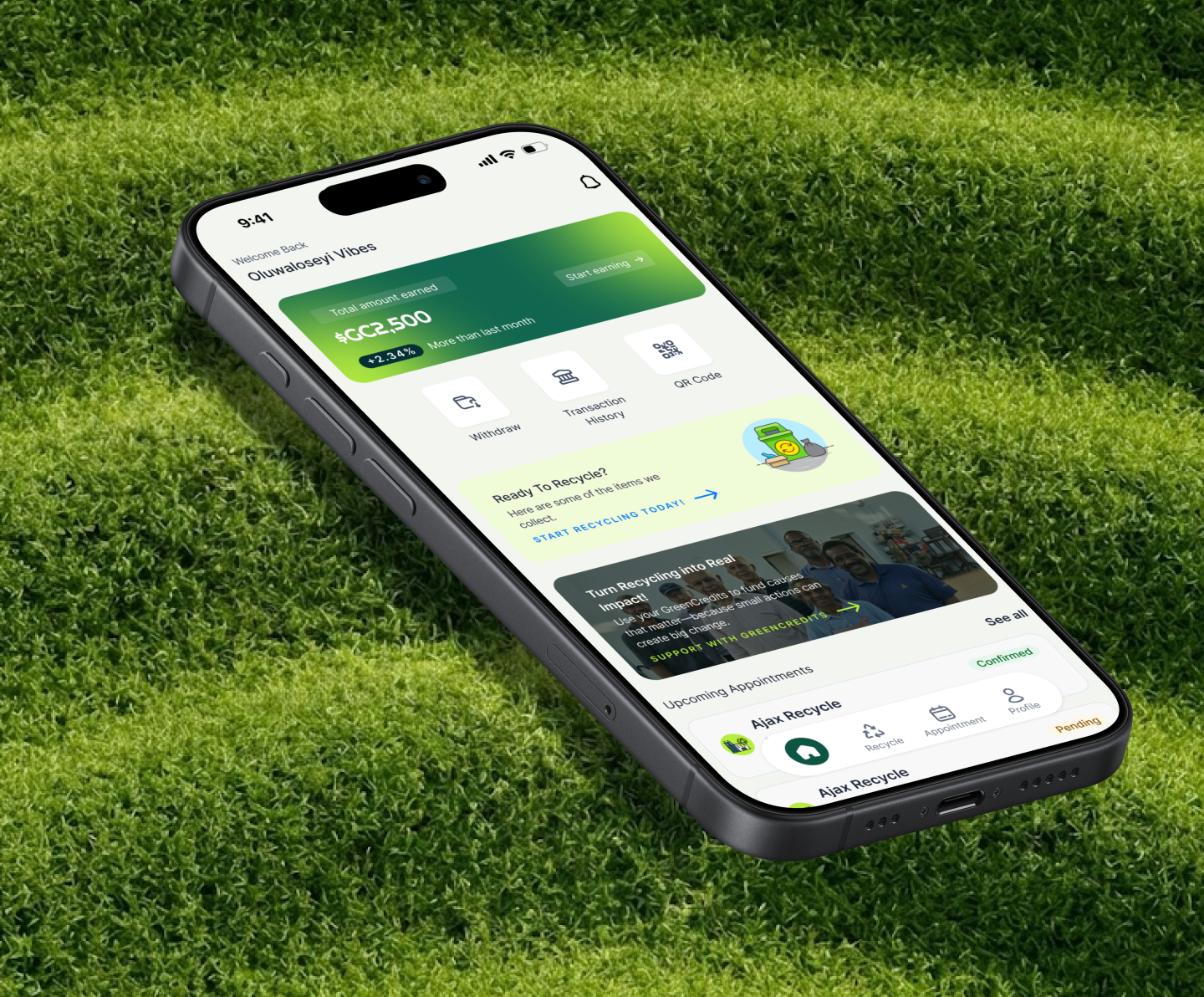
WasteBazaar home screen on a phone lying on grass: GreenCredits balance, recycling shortcuts, upcoming appointments
Role
Product Designer, end to end
Platform
Mobile · user + driver apps
Focus
UX / UI · Sustainability · Logistics
Year
2024
92% user satisfaction +48% participation −32% scheduling time
The 90-second version

The problem

People want to recycle. The infrastructure makes it inconvenient, opaque, and unrewarded, so most never build the habit.

What I owned

Research with 40 users and 28 drivers, personas, flows, wireframes, and hi-fi UI for two apps: the household side and the driver side.

Three decisions

  • GreenCredits rewards that accumulate
  • Item previews so drivers accept informed
  • QR handoffs that settle trust

What changed

  • −32% time to schedule + complete
  • +48% recycling participation
  • 92% user satisfaction
01 · The problem

Recycling is broken by design.

The intent is there. The system isn't. Four barriers kept showing up, for households and for the drivers who serve them.

(01)

No clear access

Discovering where and how to recycle is inconsistent. Drop-off points and accepted materials are guesswork.

(02)

Unreliable pickups

No transparency, no tracking, no driver accountability. A missed pickup costs the habit.

(03)

Zero incentive

Sustainable behaviour goes unacknowledged, so it stays a chore instead of becoming routine.

(04)

Fragmented operations

No shared platform connects users and collectors. Both sides coordinate blind.

02 · Research

Listen first, design second.

Structured interviews and surveys with 40 households and 28 recycling drivers. Three findings set the direction for everything that follows.

0%30 of 40 users

Want to recycle more, but find the current process inconvenient or unclear.

Implication Simple scheduling, clear material guidance, and flexible pickup or drop-off options. Remove friction before adding anything.

0%22 of 40 users

Said incentives would make them recycle consistently, if rewards felt tangible.

Implication This finding became GreenCredits: real value through cash withdrawals, coupons, or donations. Rewarding, not obligatory.

0%17 of 28 drivers

Struggle to find consistent jobs and estimate profit before accepting a collection.

Implication The driver experience leads with visibility and control: materials, estimated value, distance, and earnings shown upfront.

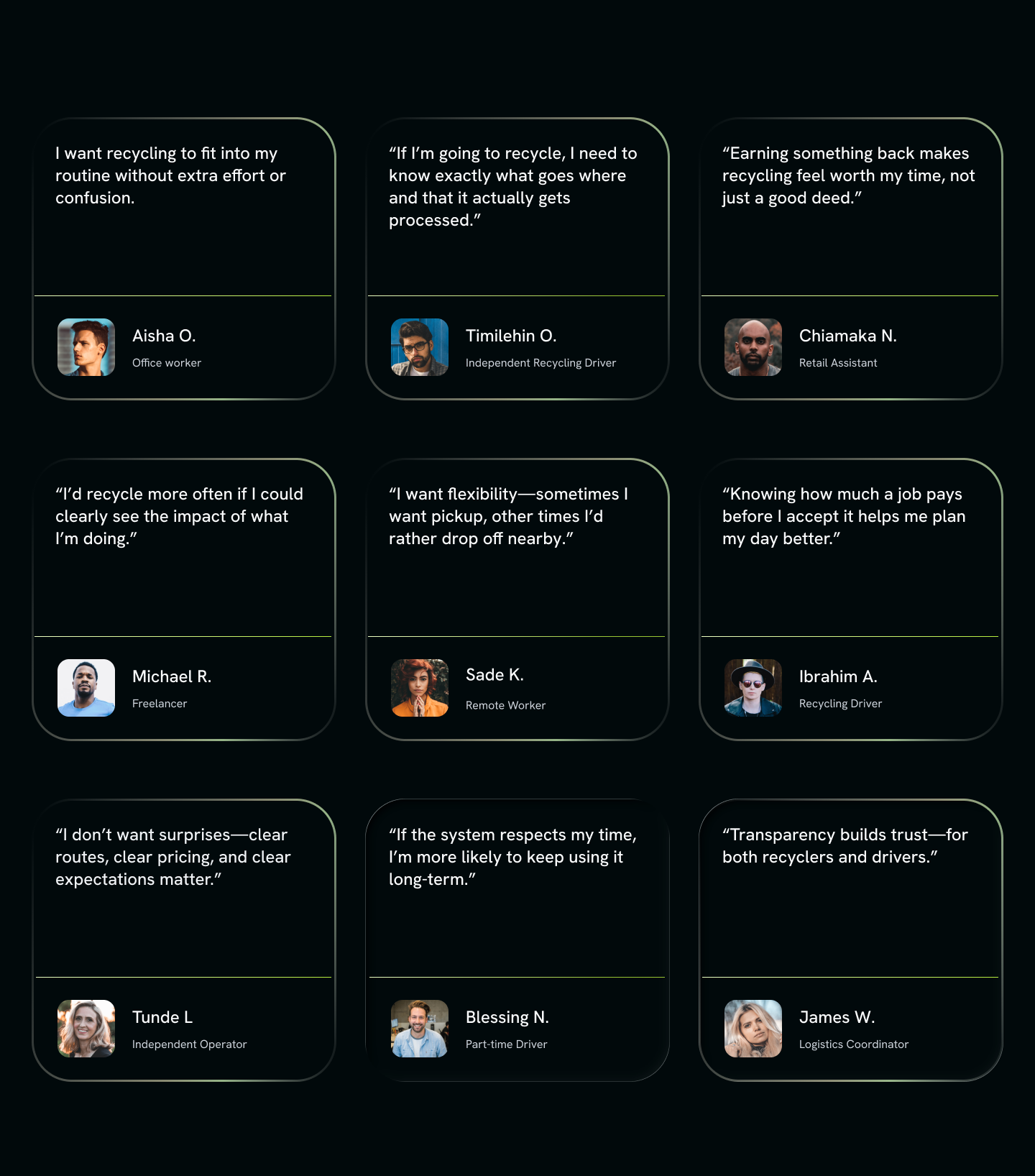
Nine interview quotes from users and drivers, including: I want recycling to fit into my routine without extra effort or confusion
In their words · nine of the sixty-eight people interviewed
0%
Convenience
0%
Clarity
0%
Incentives
0%
Predictability
03 · Who it serves

Two sides. One marketplace.

Tom George, 54

Household · Bartender

Tom George, the household persona: a bearded man in glasses looking into the camera

"I want to recycle responsibly in a way that is simple, accessible, and clearly worthwhile."

Goals Recycle household waste without stress or confusion. Earn real value from everyday recycling. Contribute to a cleaner environment with minimal effort. Pain point Unclear recycling rules, limited access to nearby points, and no reward for staying consistent.

Lynda Zoe, 23

Driver · Taxi driver
Lynda Zoe, the driver persona: a young woman in glasses lit by red and blue light

"Predictable, fair earnings and efficient workflows would make recycling a viable source of income."

Goals Earn consistent income through recycling jobs. Optimize routes and time to maximize daily earnings. Understand job value before accepting a task. Pain point Uncertainty around job profitability and inefficient coordination make it hard to plan routes, manage time, and earn reliably.
04 · The flow

Five steps. Zero friction.

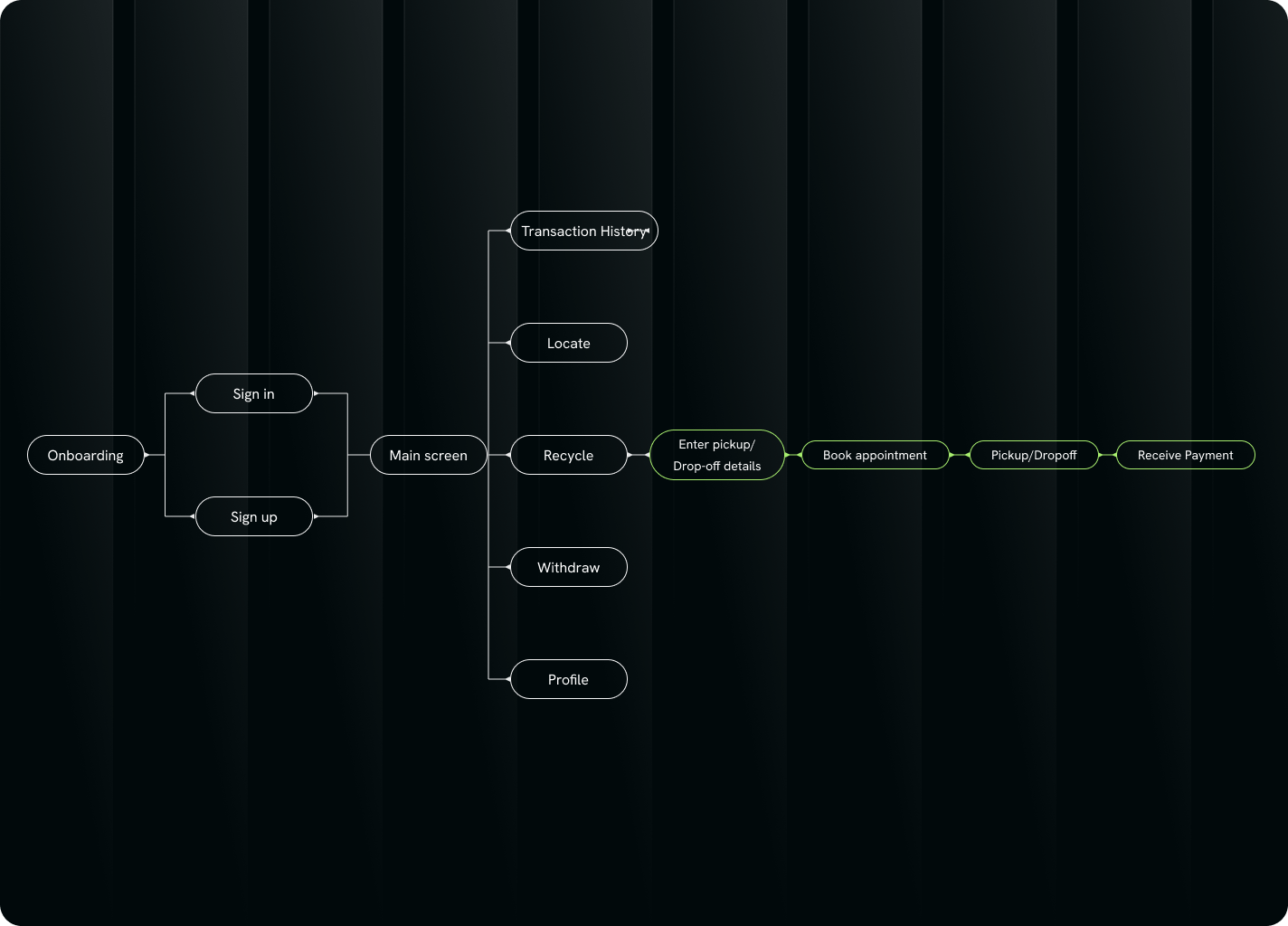
The core journey reduced to its minimum viable steps. Every screen removed is a user retained.

Book Confirm Pickup Verify Reward
End-to-end user flow diagram from onboarding through booking, pickup or drop-off, and payment
End-to-end flow · onboarding through reward collection
05 · Key decisions

No arbitrary choices.

Each decision traces back to a research finding, was validated in usability testing, and is framed the way it was made: a tension, a choice, a result.

Decision 01 · from the 54%

GreenCredits reward system

Tension
Early exploration showed users treating pickups as one-time transactions: request, collect cash, leave. Nothing pulled them back.
Choice
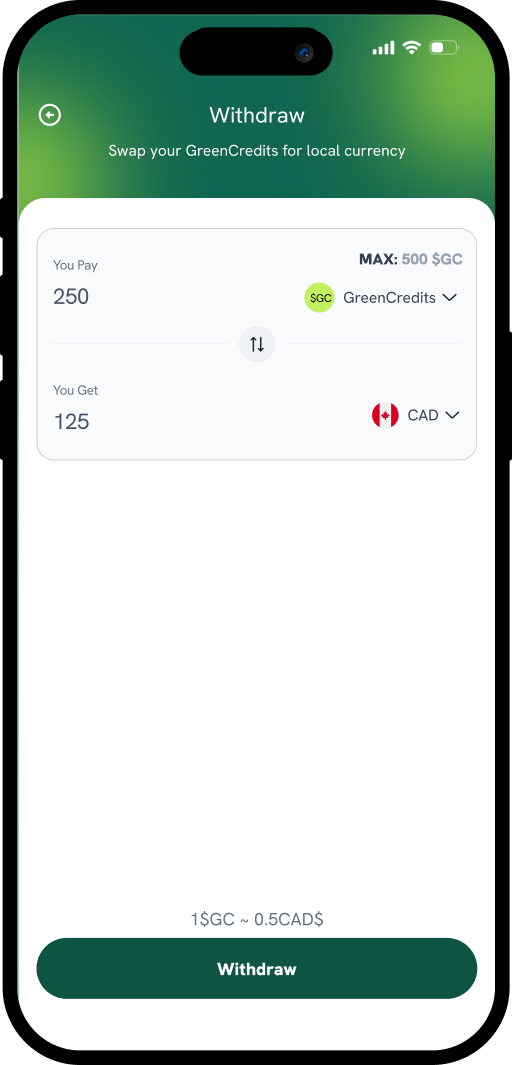
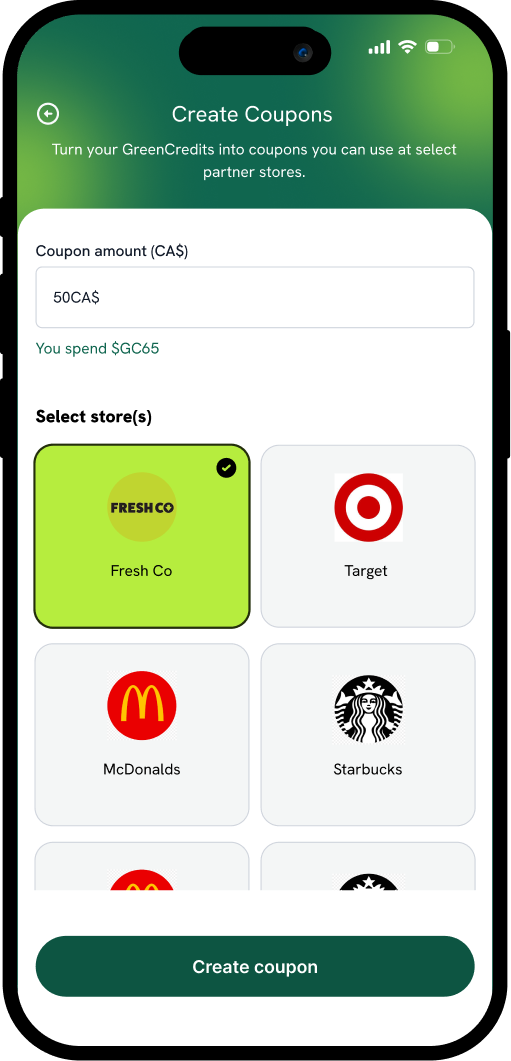
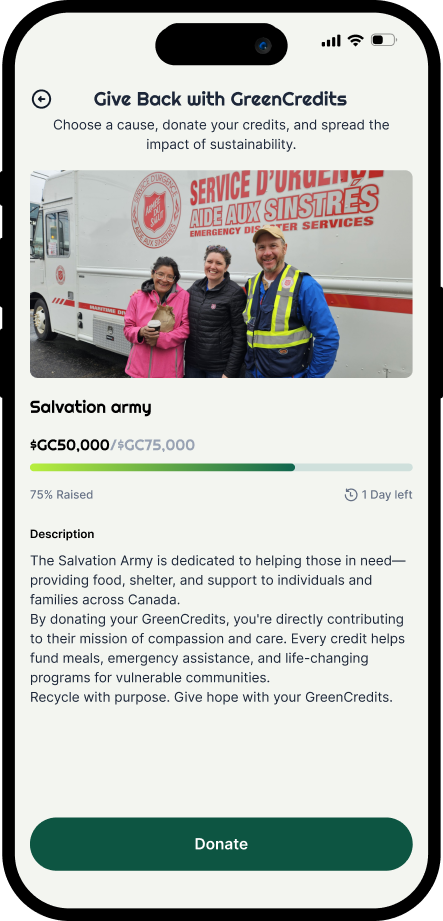
An in-app reward system. Credits accumulate with every pickup and can be redeemed for store coupons, discounts, or converted to local currency.
Result
Recycling became a repeatable loop. Users return to track impact and unlock rewards, not just to book a pickup.
Decision 02 · from the 61%

Pickup transparency for drivers

Tension
Drivers often didn't know what they were collecting until arrival. Estimating value, space, and effort was guesswork, so they cancelled.
Choice
A detailed item preview on every request: material type, estimated quantity, potential value, and photos of the actual load.
Result
Faster, better-informed accept decisions, fewer cancellations, and smoother coordination for both sides.
Decision 03 · trust by design

QR-verified handoff

Tension
A marketplace between strangers invites disputes: did the pickup happen, was the load as described, who gets paid?
Choice
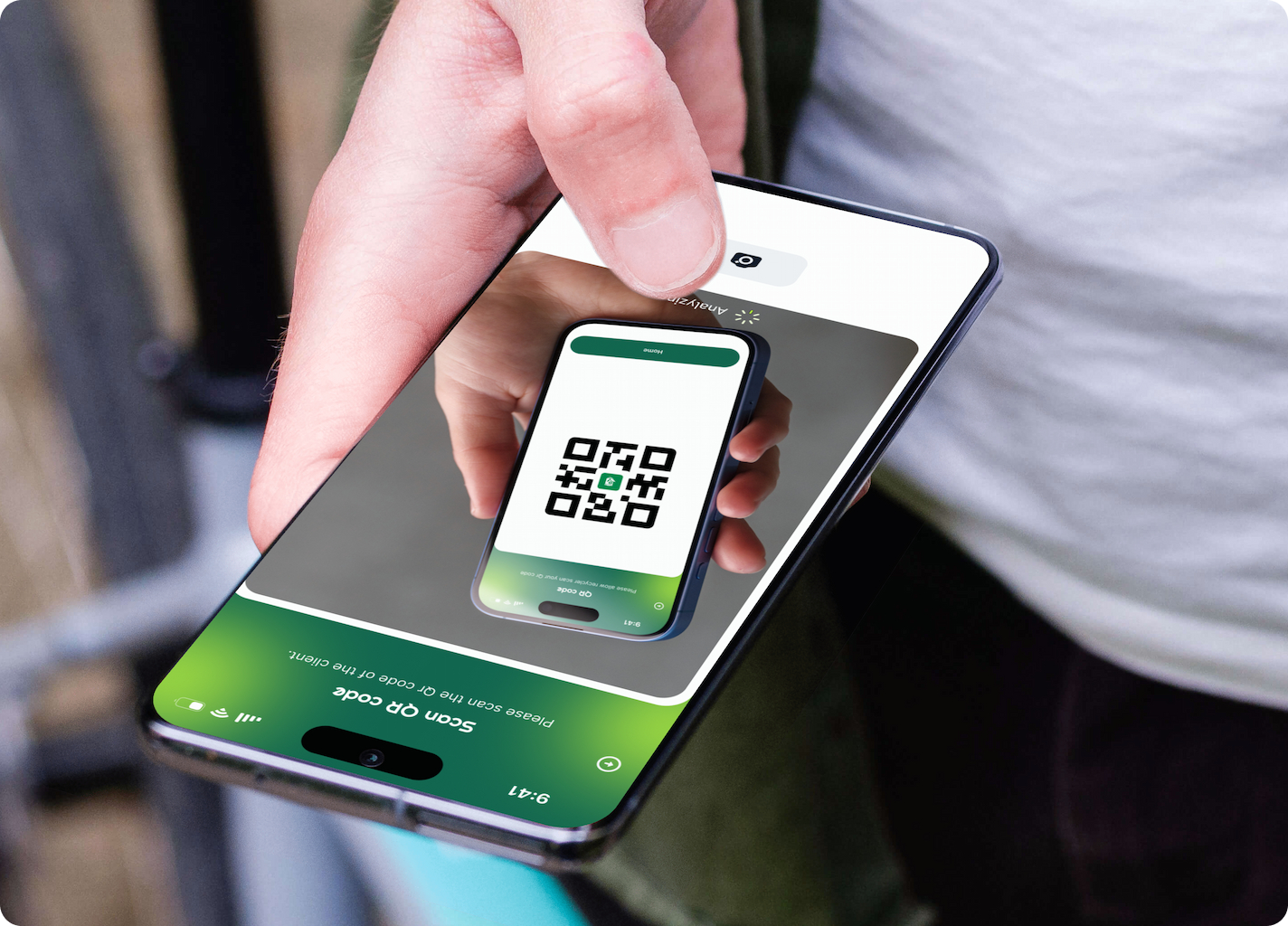
A unique QR code per booking, scanned by the driver at handoff. Both sides get a confirmation record and GreenCredits land instantly on scan.
Result
Nothing left to argue about. The scan timestamp settles disputes, and trust stops depending on goodwill.
A driver scans the QR code on a household phone to verify the pickup handoff
06 · From structure to surface

Structure before style.

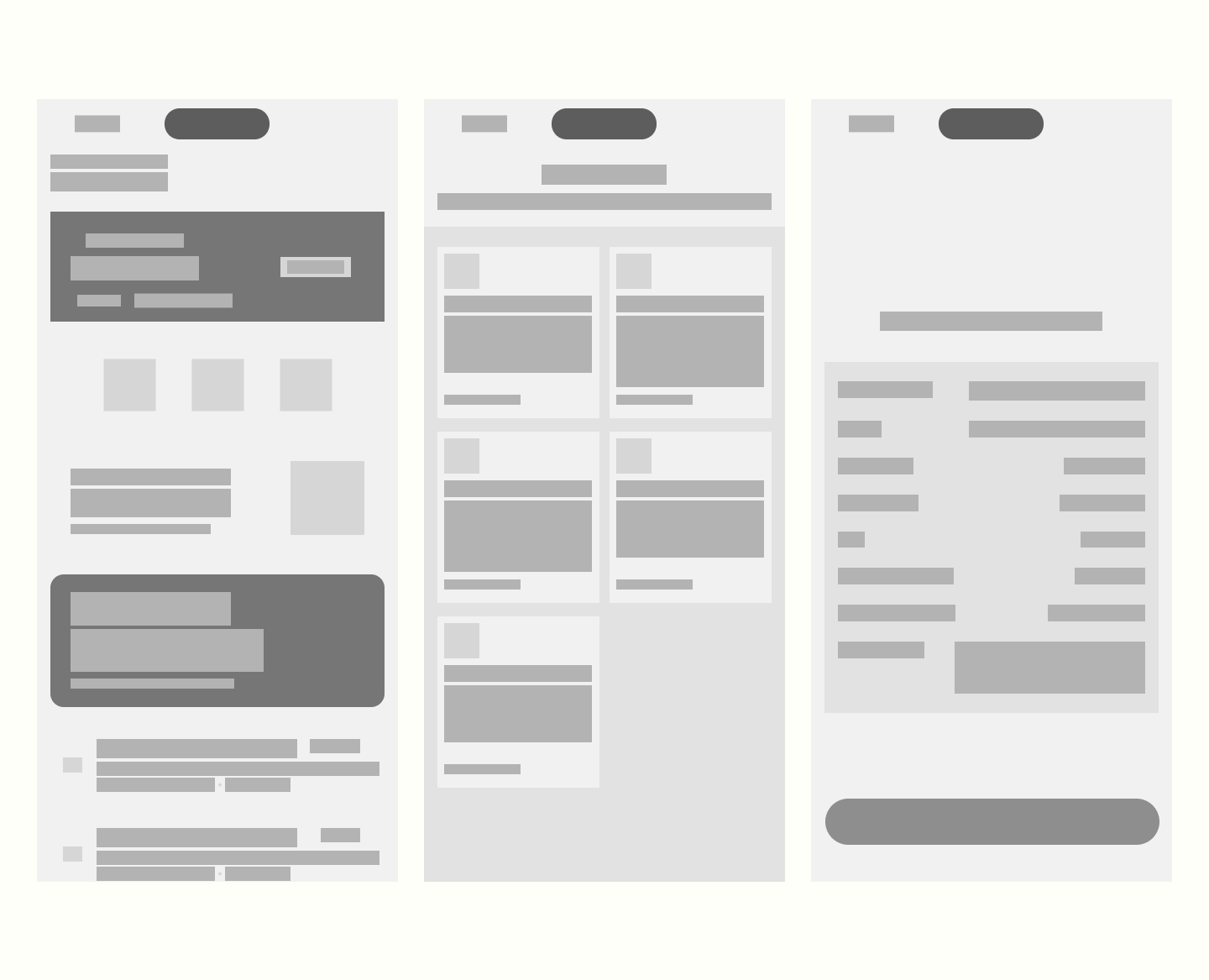
Low-fidelity layouts mapped scheduling, driver matching, and rewards before a single colour was chosen. Tested with 8 users to catch hierarchy problems while they were still cheap to fix.

Three low-fidelity wireframes covering the home, materials grid, and booking confirmation screens
Wireframes · booking and rewards flows

The household app

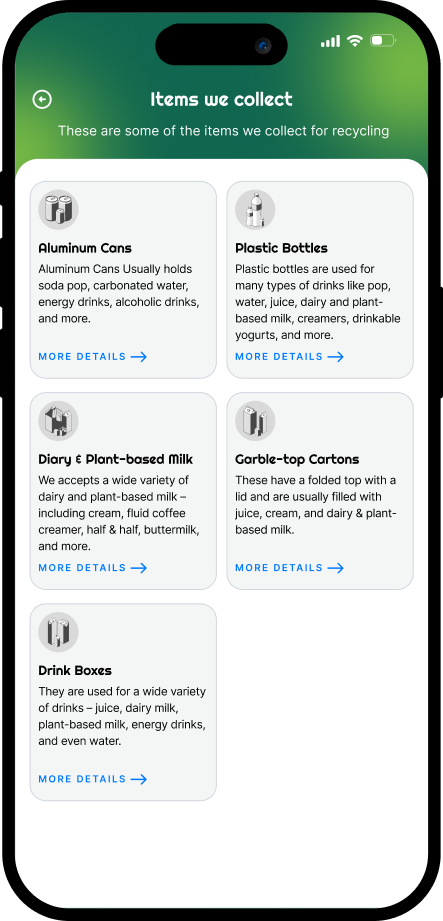
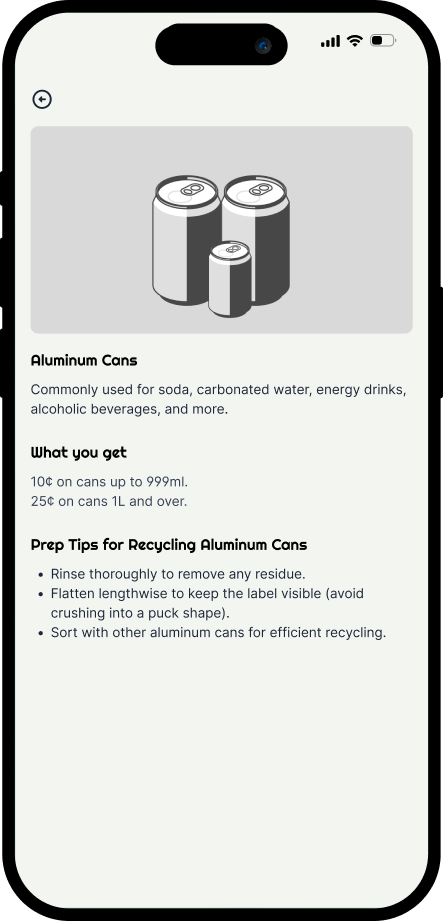
Onboarding · materials · booking · GreenCredits

The driver app

Availability · job queue · pickup details · earnings
07 · Outcomes

What changed.

0%

Average time to schedule and complete a pickup, against traditional drop-off recycling.

+0%

Recycling participation, driven by simplified booking and flexible scheduling.

0%

User satisfaction, citing convenience, transparent pricing, and a reliable driver network.

08 · Reflection

What I'd carry forward.

(01)

Fewer steps aren't a compromise. Every step removed is a user retained.

(02)

Incentives change behaviour only if they feel proportional and visible. Progress must be shown, not assumed.

(03)

In logistics platforms, trust is the product. Verification and transparency aren't features you add later; they're what the whole thing runs on.

The best recycling experience is the one users never have to think about.